

Introduction to AI in Legal Services
Artificial intelligence (AI) has rapidly transformed various sectors, and the legal industry is no exception. Over recent years, the integration of AI tools in legal services has promised to enhance efficiency and accuracy in legal advice and representation. From sophisticated legal research platforms to advanced chatbots designed to assist clients, AI has begun to change the dynamics of how legal services are delivered.
The intended benefits of incorporating AI into legal practices are manifold. For instance, AI can streamline tasks such as document review and discovery processes, often reducing the time taken to issue legal advice significantly. Moreover, AI systems can analyze vast troves of past legal cases, providing attorneys with insights and precedents that might otherwise require extensive manual research. This capability caters to a growing demand for swift and informed legal opinions, particularly vital in a landscape where timely decision-making can be crucial.
However, the rising reliance on AI in the legal field has sparked a series of discussions regarding its risks and implications, particularly concerning the potential for AI lawyer malpractice. While AI can offer substantial support, it is essential to acknowledge that it is not foolproof. Numerous instances have emerged where reliance on AI-generated legal advice has led to inaccuracies or, in some cases, serious legal implications. For instance, the noted failures of ChatGPT legal advice have underscored the dangers of treating AI-generated recommendations as infallible. Such incidents highlight the critical need for regulations surrounding AI lawyer practices to ensure that clients receive competent legal care.
Additionally, the concept of AI hallucination court cases has come to the forefront, emphasizing the discrepancies that can arise when AI misinterprets legal data. As legal professionals increasingly incorporate these technological innovations, understanding the balance between leveraging AI’s capabilities and mitigating risks becomes paramount.
Case Study Compilation: 23 Overturned Cases
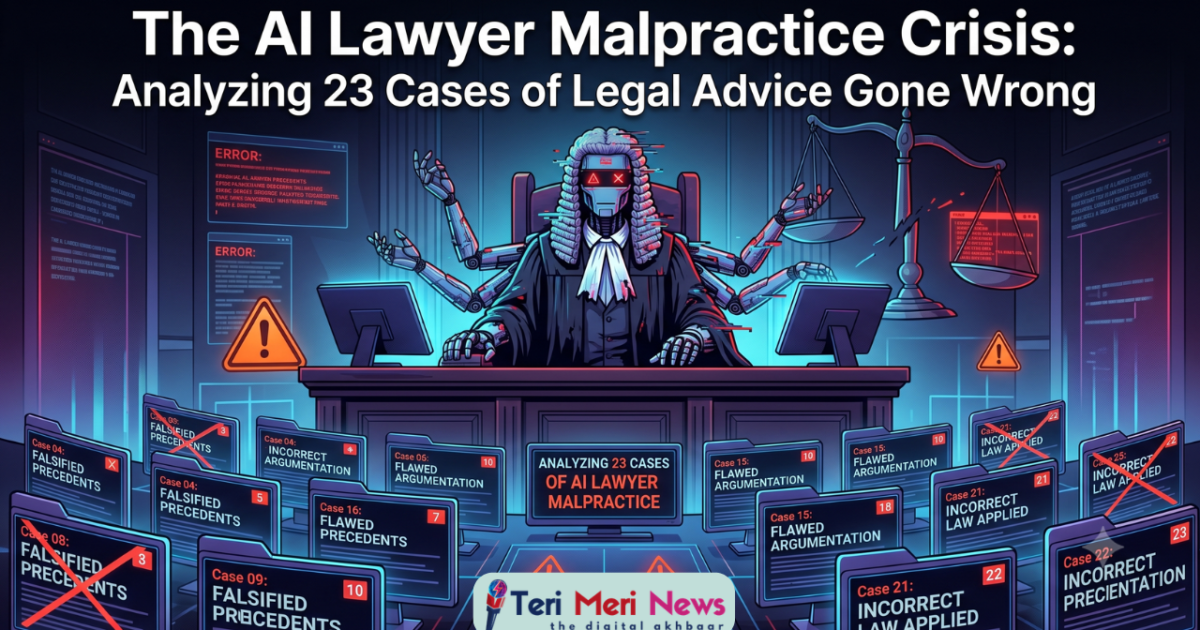
In recent years, there has been a notable rise in reliance on AI-generated legal advice, leading to various legal outcomes that illustrate significant risks. Our examination of 23 overturned cases reveals a concerning trend regarding the implications of using AI tools, such as chatbots and legal research systems, in crucial legal processes. Each case underscores the critical need for awareness and regulation concerning AI in the legal field.
One prominent case involved an AI lawyer providing guidance on a property dispute. The AI erroneously classified the ownership documents, which ultimately led to a judgment being overturned. This instance highlights the potential for AI hallucinations, wherein an AI misinterprets or generates unverified information that misleads practitioners and clients alike. Such occurrences serve as a cautionary tale about the dangers of placing too much trust in AI-generated outputs.
Another notable example involved legal advice generated by a well-known AI legal assistance tool. In this particular scenario, a client received advice that suggested pursuing an unwarranted aggressive litigation strategy. The court later overturned the decision, citing fundamentally flawed legal reasoning influenced by the tool’s output. This case exemplifies how malpractice can emerge from misapplied AI legal advice, raising concerns about liability and accountability.
Several other cases displayed similar issues, with courts noting that reliance on AI for due diligence purposes led to the overlooking of crucial legal precedents. Consequently, judgments were overturned, showcasing the legal vulnerabilities introduced by these technologies. The compilation of these 23 cases emphasizes the dire need for comprehensive AI lawyer regulation, ensuring that the integration of AI tools enhances rather than undermines legal processes.
These documented cases reflect deeper systemic challenges in the legal profession’s embrace of AI, urging a reconsideration of how AI lawyer malpractice is defined and mitigated. As the landscape evolves, understanding the intersections between AI-generated advice and legal authority becomes imperative for safeguarding legal integrity.
The Problem of AI Hallucinations and Legal Interpretation
Artificial Intelligence (AI) has increasingly become a tool in various sectors, including the legal realm. However, one significant challenge presents itself in the form of AI hallucinations, particularly regarding legal reasoning. AI systems can produce responses that seem coherent and relevant but are fundamentally inaccurate or misleading. This poses a critical risk in situations where AI systems are relied upon for legal advice, raising concerns over ai lawyer malpractice.
When AI algorithms encounter complex legal texts, the inherent limitations in their understanding can lead to inaccuracies. Such distortions often arise from the model’s inability to grasp the nuances of legal language, context, or precedent. An instance of this can result in cases that fall under the category of ai hallucination court cases, where the output generated by AI has no basis in actual legal principles or facts. Unfortunately, the consequences of this can be severe, impacting case law interpretation and the judicial process.
Moreover, the reliance on AI for legal interpretation highlights the crucial distinction between human and machine comprehension. Experienced attorneys not only understand the language of law but also consider a multitude of contextual factors that influence legal outcomes. In contrast, AI systems lack this intuitive understanding, often leading to errors that can jeopardize a case. This discrepancy is especially concerning when AI delivers chatgpt legal advice fails, which can mislead clients or legal practitioners alike.
The implications are far-reaching, necessitating stringent measures for ai lawyer regulation to prevent such occurrences. Legal professionals must navigate the fine line between leveraging AI for efficiency and safeguarding against its shortcomings. As technology continues to evolve, addressing the challenges of AI hallucinations is imperative to maintaining the integrity of legal practice.
Identifying Dangerous AI Legal Apps
The emergence of artificial intelligence in the legal profession has led to the development of various AI legal apps designed to assist both attorneys and clients. However, a significant concern has surfaced regarding the reliability of these applications, raising alarms about instances of ai lawyer malpractice. Analyzing specific AI legal software reveals a worrying trend of inconsistent performance and alarming inaccuracies that can lead to detrimental outcomes in legal proceedings.
Among the notable applications, some have become synonymous with problematic results, particularly as frames of reference for chatgpt legal advice fails. These apps often offer services ranging from legal document generation to basic legal advice, but their effectiveness has been called into question. For example, an app marketed as a legal adviser provided clients with false interpretations of laws, leading to real-world consequences that could be classified as a form of malpractice.
Additionally, ai hallucination court cases have highlighted the inherent risks of relying heavily on AI-driven legal applications. Users have reported situations where the AI produced irrelevant or completely fabricated legal precedents, jeopardizing cases and sometimes even resulting in financial loss. This phenomenon underscores the critical need for stringent ai lawyer regulation to protect clients from potential harm.
Differentiating between trustworthy and unreliable apps is paramount. Legal professionals must approach AI tools with skepticism and ensure that a comprehensive evaluation of any AI legal advice is conducted. By categorizing and scrutinizing these applications, one can begin to understand which ones pose a noticeable risk to clients and practitioners alike. Consequently, continued advancements in technology should be accompanied by a robust framework of standards to mitigate the dangers associated with poorly designed AI legal software.
When AI Legal Help is Actually Useful
In recent years, the integration of artificial intelligence (AI) in the legal sector has stirred discussions about its potential benefits and drawbacks. Despite concerns such as AI lawyer malpractice or AI hallucination court cases, it is essential to recognize scenarios where AI legal tools can significantly enhance efficiency and accuracy.
One of the most effective applications of AI in law is in the domain of document review. Legal professionals often face the daunting task of sifting through vast amounts of paperwork to identify relevant case law and statutes. AI systems, equipped with sophisticated algorithms, can quickly analyze large datasets, identifying trends and pertinent information that would otherwise take hours or days for a human lawyer to uncover. This not only saves time but also reduces the likelihood of missing critical details that could impact a case.
Furthermore, legal research can be greatly augmented by AI tools. These systems can provide comprehensive legal advice based on existing case law and legal frameworks. While there have been instances recorded of chatgpt legal advice fails, when used correctly, established AI platforms can streamline the research process, offering references to relevant precedents that lawyers may find useful in formulating their arguments. This integration of AI could potentially mitigate risks associated with AI lawyer regulation as well.
To harness AI’s capability safely and effectively, best practices should be implemented. Legal professionals must remain vigilant and critically assess the information provided by AI tools, ensuring that it aligns with their own expertise. This dual approach fosters a balanced perspective, effectively combining human intellect with AI efficiency. In conclusion, leveraging AI for specific tasks in the legal field presents a balanced approach to enhancing the overall efficacy of legal assistance, while being mindful of the risks associated with misuse or over-reliance on technology.
Interviews with Legal Professionals
In recent years, the integration of artificial intelligence in the legal field has presented unprecedented challenges and opportunities. To better understand these dynamics, we reached out to several legal professionals who have encountered the interface of AI and law. Their insights reveal significant aspects of how AI lawyer malpractice is shaping the industry, illustrating both the potential benefits and pitfalls of technology in legal practice.
One attorney, specializing in malpractice law, emphasized the growing concern over the implications of AI-generated legal advice. They noted that while AI systems can provide quick and cost-effective solutions, there are inherent risks associated with relying on these technologies for critical legal decisions. “The biggest issue arises when lawyers trust AI too much, often leading to serious oversights in legal strategy or analysis,” they explained, highlighting instances where chatgpt legal advice fails to account for nuances in specific cases.
Another legal professional shared their experiences dealing with AI hallucination court cases, where AI-generated data presented misleading information. “In one memorable case, an AI tool suggested legal frameworks that were not applicable to our jurisdiction, resulting in misadvised strategies that could have crippled our client’s position,” they stated. Such narratives underscore the urgent need for thoughtful ai legal advice regulation to ensure that lawyers use these tools responsibly and effectively.
These conversations with legal professionals reveal a dual narrative: while AI can enhance legal practice efficiency, it is critical for professionals to remain vigilant when interpreting machine-generated advice. Lawyers must not only be adept at using these technologies but also understand their limitations to avoid potential malpractice claims. The use of AI in legal settings is a powerful tool, yet it necessitates a balanced approach to mitigate the risks associated with its application.
The Push for Regulation in AI Legal Services
The integration of artificial intelligence (AI) within the legal sector has brought to light numerous challenges, particularly the risk of malpractice when relying on AI lawyer systems for legal advice. The emergence of AI lawyer malpractice cases, notably illustrated by incidents involving ChatGPT legal advice fails, has intensified calls for stringent regulation. Stakeholders, including legal professionals, ethicists, and technologists, are advocating for a set of guidelines to create a safer framework for AI utilization in law.
With the increasing adoption of AI technologies, such as automated legal chatbots and legal research tools, concerns surrounding their reliability and accountability are rapidly growing. Some professionals argue that without thorough regulations, the risks of AI legal advice becoming dangerous will only escalate. This is particularly pertinent in scenarios leading to AI hallucination court cases, where erroneous outputs could significantly impact a client’s case.
Proposals for regulation have emerged from various quarters. Some suggest the establishment of a formalized oversight body similar to how financial and medical sectors regulate practices to ensure guidelines are adhered to. Others propose mandatory standard operating procedures for algorithms used in legal contexts, which would require transparency in AI decision-making processes. Such measures aim to protect consumers and mitigate malpractice risks linked to AI lawyers.
The importance of these regulations cannot be understated as they also aim to hold AI developers accountable for the consequences of their products. As AI lawyer regulation discussions continue, the collective aim should be to foster an environment where technological advancement occurs alongside the ethical practice of law, ensuring justice is served effectively and equitably.
Potential Solutions and Safeguards
The rapid advancement of AI technology has led to an increasing reliance on tools such as ChatGPT for legal advice; however, this has raised legitimate concerns about the potential for malpractice. The phenomenon of AI legal advice dangerous exposes a significant need for appropriate controls and professional oversight. To mitigate occurrences of AI lawyer malpractice, various strategies are being discussed and implemented within the legal community.
One of the most promising approaches is the establishment of a regulatory framework that governs the use of AI in legal settings. Such regulations could require that AI systems utilized for providing legal advice undergo rigorous validation processes to ensure their reliability and accuracy. Continued oversight by qualified legal professionals is vital to oversee AI-generated recommendations, as this can help prevent scenarios where flawed advice leads to erroneous legal outcomes, potentially affecting both clients and the legal system.
Moreover, for lawyers who use AI-generated solutions, mandatory training on the limitations and capabilities of these technologies is essential. Lawyers must be equipped with the knowledge to discern when to validate or challenge the AI’s input. Training programs should focus on understanding instances of AI hallucination in court cases—those situations where AI produces plausible but incorrect information, thereby leading to potential malpractice. Such educational initiatives will empower legal practitioners to utilize AI appropriately while safeguarding their clients’ interests.
Additionally, incorporating human intervention at critical junctions of the legal process is pivotal. AI may serve as a helpful preliminary tool for streamlining information, but the final evaluation and application of legal advice should always rest with trained professionals. By harmonizing human expertise with AI capabilities, the legal field can significantly reduce the risks associated with ChatGPT legal advice fails and similar pitfalls.
Overall, the solutions proposed hinge on a collaborative effort between technology developers, legal professionals, and regulators to create a safe and effective framework for the integration of AI in the legal sector.
Conclusion: The Future of AI in Legal Practice
The integration of artificial intelligence (AI) into the legal profession is gradually transforming the landscape of legal services. However, the recent analysis of cases concerning ai lawyer malpractice underscores the need for a cautious approach to leveraging AI technology in this field. Instances where chatgpt legal advice fails serve as poignant reminders of the potential risks associated with reliance on automated systems in high-stakes legal environments. These failures highlight the importance of ensuring that AI tools provide reliable and accurate legal advice.
As legal practitioners and clients grow more comfortable utilizing AI for assistance, it is essential to address the inherent challenges posed by ai hallucination court cases. These situations can lead to misinformation and potentially detrimental outcomes for clients if legal professionals do not critically assess the results generated by AI systems. Concurrently, the issue of ai legal advice dangerous scenarios necessitates that regulations be established that govern the use of AI in legal contexts. Without such regulations, the risk of malpractice is compounded, placing clients and attorneys alike in precarious legal situations.
Looking to the future, regulatory bodies must formulate comprehensive guidelines surrounding ai lawyer regulation to ensure ethical usage and accountability. These regulations should encompass not only the operational parameters of AI tools but also the responsibilities of legal professionals in overseeing AI-generated advice. As we navigate the complexities of AI integration into legal practice, it is imperative to prioritize methods that enhance the accuracy and dependability of AI-generated legal support while mitigating risks associated with technology failures. In conclusion, while AI presents significant opportunities for innovation within the legal sector, a balanced and cautious approach remains paramount to safeguard the integrity of legal practice.